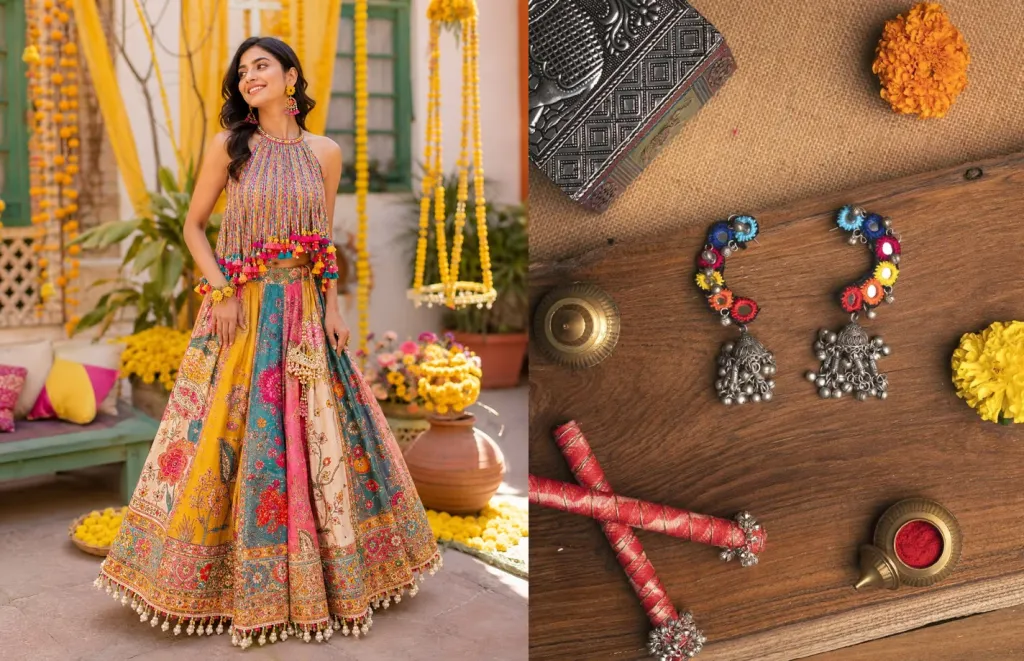
There is something indescribably electric about the air as soon as September rolls around. If you grew up listening to the distant, rhythmic thud of a dhol practice session down the street, or if your entire autumn calendar revolves around finding the best pass for the biggest community ground in town, you already know what I mean. Navratri is not just a festival; it is an emotion. It is nine nights of pure, unadulterated joy, sparkling lights, the scent of fresh marigolds, and the sheer, exhausting exhilaration of spinning in circles until your feet literally beg you to stop.
And let’s be completely honest with each other—the preparation starts weeks, sometimes months, in advance. Long before the first lamp is lit for Ghatasthapana, group chats are flooded with costume ideas, fabric market crawls are scheduled, and the eternal debate begins: What are we wearing this year?
If you are hunting for the absolute best way to style yourself for Navratri 2026, you are in the right place. Choosing a lehenga (or a traditional chaniya choli) for garba and dandiya nights is very different from picking out a wedding outfit. A wedding lehenga is designed to make you look statuesque and majestic while you pose for photographs. A Navratri lehenga, on the other hand, has to work for a living. It has to breathe, flow, withstand sweat, handle thousands of high-energy spins, and still make you look like an absolute vision under the flashing neon lights of the pandal.
Let’s walk through everything you need to consider this season to find a lehenga that feels like a second skin and turns every head in the room.
The Vibe Shift of 2026: Balancing Heritage with Modern Ease
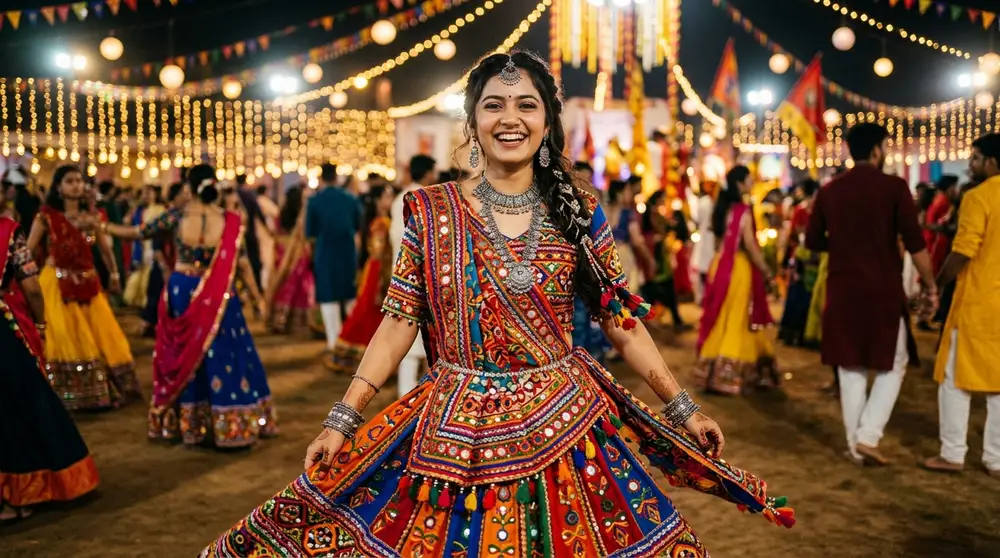
Fashion trends evolve every single year, but 2026 feels particularly special because it marks a massive swing back toward authentic artisan craftsmanship, paired with modern, feather-light comfort. Gone are the days when people wanted stiff, heavily plastic – sequined skirts that felt like wearing a suit of armor.
This season, the focus is entirely on fluid movement and storytelling through textiles. Designers and local artisans across Gujarat and Rajasthan are leaning heavily into rich, tactile details: genuine hand-blocked prints, authentic abhala (mirror work) that catches light from miles away, and intricate rabari embroidery. At the same time, urban fusion is having a huge moment. People are pairing traditional heavily-embroidered chaniya skirts with contemporary, experimental blouses, creating a look that honors the roots while speaking a thoroughly modern design language.
When you are browsing through racks or scrolling through designer pages this year, keep your eyes peeled for pieces that tell a story. Handloom fabrics, organic dyes, and traditional motifs are taking center stage over mass-produced factory glitter.
Decoding the Nine-Day Color Palette for Maximum Festive Energy
One of the most fun, culturally immersive traditions of Navratri is aligning your wardrobe with the traditional nine-day color calendar. While nobody is going to stop you from wearing your favorite shade on the wrong day, playing along adds a wonderful layer of intentionality to your festive planning. Let’s break down how you can style the traditional palette for 2026:
The Opening Nights: Bold and Vibrant Tones
- Day 1 (Royal Blue / Orange): Kick off the first night with confidence. A deep, regal blue skirt paired with a fiery orange blouse—or vice versa—sets an energetic, high-octane tone for the rest of the week.
- Day 2 (Yellow / White): As the festival transitions into its second phase, turmeric yellows and pristine ivory shades bring a clean, radiant warmth to the dance floor. Ivory cotton lehengas with multicolored threadwork look remarkably fresh and modern.
The Mid-Week Crescendo: Earthy and Rich Hues
- Day 3 to 6 (Green, Grey, Orange, and Red): This is where you pull out the classic emerald greens and passionate crimson reds. These shades are timeless for a reason—they photograph brilliantly against night sky backgrounds and look incredible when contrasted with oxidized silver jewelry.
The Navratri Grand Finale: Deep Jewel Tones
- Day 7 to 9 (Royal Purple, Peacock Green, and Pink): As Navratri reaches its emotional peak leading into Ashtami and Dussehra, deep jewel tones dominate. Think rich magenta, deep violet, and shimmering peacock teal. These colors carry a natural gravity and elegance that feel appropriate for the culmination of the celebrations.
Fabric Matters: Choosing Materials That Survive the Dance Floor
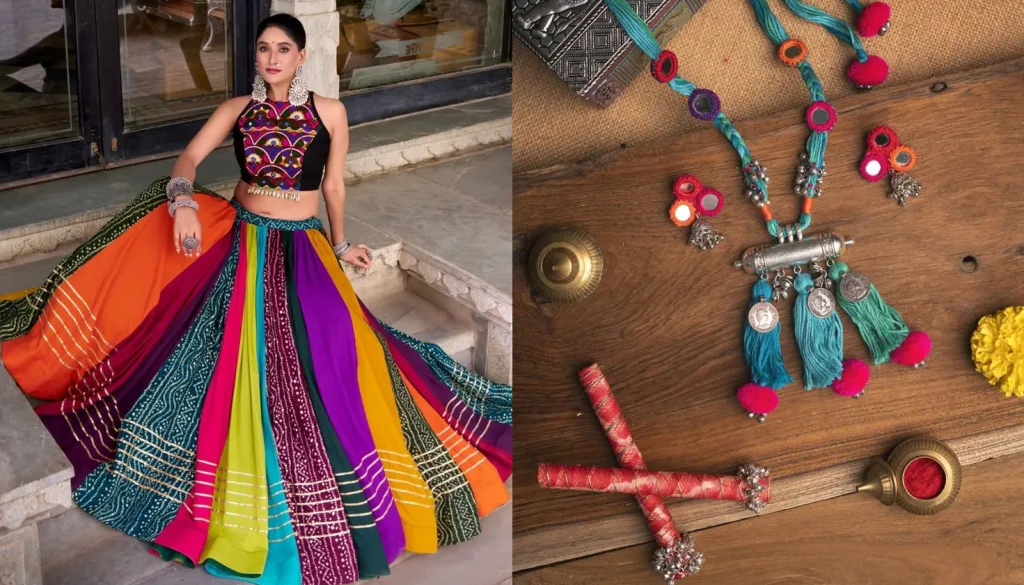
Let’s talk about reality for a second. You might fall completely in love with a stunning, heavyweight silk-velvet lehenga on a mannequin inside an air-conditioned boutique. But put that same outfit on a humid October night under a massive tent filled with five thousand people dancing simultaneously, and you will regret your life choices within twenty minutes.
Your choice of fabric is the single most important factor determining whether you will dance freely until 2 AM or spend the whole night sitting uncomfortably on a plastic chair.
Pure Cotton and Handloom Blends
If you are a hardcore garba enthusiast who treats the circle like an Olympic sport, pure cotton is your holy grail. Cotton breathes naturally, absorbs moisture, doesn’t trap heat, and holds traditional block prints and mirror work with absolute perfection. Look for mulmul-lined cotton skirts that offer structure without the suffocating weight.
Navratri Lightweight Georgette and Crepe
For those who want maximum flare with minimum burden, georgette is an incredible choice. It floats around your ankles like water, creates a stunning, dramatic silhouette when you spin, and stays remarkably light even when detailed with delicate silver gota-patti work.
Raw Silk and Satin-Silk (For Special Nights)
Save these luxurious textures for weekend garbas or the final nights when you might spend a little less time doing high-intensity running steps and a bit more time socializing, eating festive snacks, and posing for group photos. They catch the overhead lighting like a dream.
The Science of the Twirl: Flare, Panels, and Silhouettes
A chaniya choli is fundamentally built for motion. If a skirt doesn’t flare out like an open flower when you spin, half its magic is lost.
- The Multi-Panelled Ghragra: Traditional Gujarati chaniyas use anywhere from 12 to 32 individual panels of fabric stitched together. This paneling creates natural weight distribution, allowing the skirt to flare out horizontally rather than just bunching around your shins. Look for alternate-panel designs featuring contrasting prints or colorful borders.
- Bandhani and Bandhej Classics: Tie-dye traditions remain eternal favorites. A deep maroon or mustard yellow bandhani skirt with a dense border of mirror work is a lifetime investment piece. It never goes out of style.
- A-Line and Flared Fusion Cuts: If you prefer something that fits slightly closer to the hips before exploding into volume at the hem, modern A-line fusion lehengas offer a sleek, streamlined waistline while keeping the traditional festive spirit alive.
Blouse Trends: Elevating Your Choli Game
The blouse is where you can truly let your personal style personality shine through. While the traditional backless choli tied with pom-pom doris will always reign supreme, several modern updates are dominating Navratri fashion this season:
- The Peplum and Kedia-Inspired Choli: Taking a page out of traditional Gujarati men’s kedia jackets, flared peplum blouses add a playful, bouncy dimension to your upper half. They look exceptionally chic when paired with a fitted, voluminous skirt.
- Asymmetric and One-Shoulder Cuts: Perfect for younger crowds heading to club garbas or urban fusion events, asymmetric necklines bring runway-ready edge to traditional ethnic wear.
- The Densely Mirrored Halter Neck: Universally flattering and wonderfully secure, halter necks allow you to move your arms freely without worrying about slipping shoulder straps. Plus, they frame heavy layered necklaces like an absolute dream.
Accessorizing Your Look: The Golden Rules of Navratri Styling
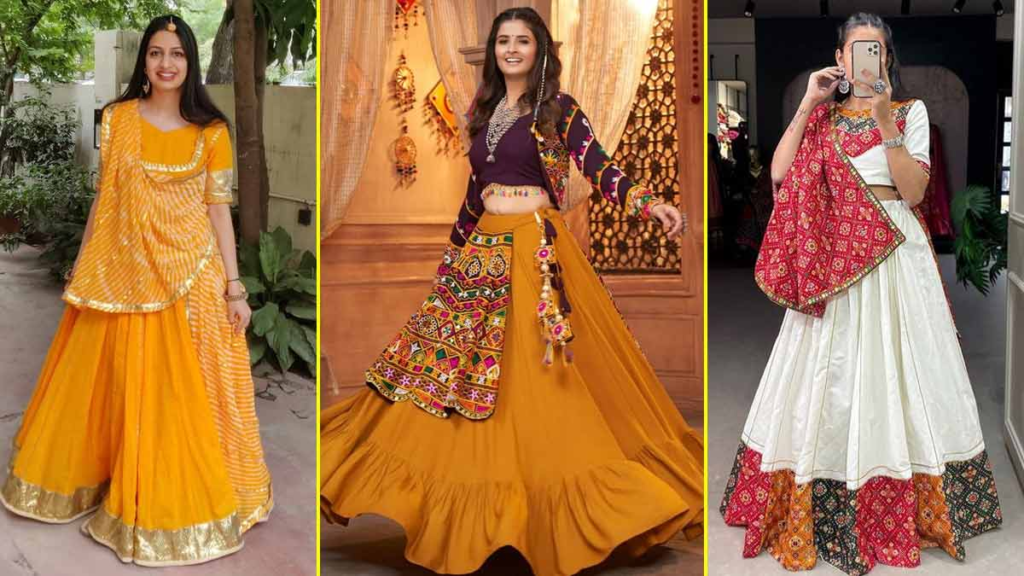
You can have the most expensive designer lehenga in the world, but if your accessories are wrong, the look falls flat. Navratri styling has its own unique rulebook.
Embrace the Power of Oxidized Silver
Leave your fine gold, platinum, and diamond sets locked safely at home. Navratri belongs entirely to chunky, rustic, oxidized silver jewelry.
- Layer multiple chokers of varying lengths so they rest across your collarbone.
- Wear oversized jhumkas that sway dynamically with your head movements.
- Stack your wrists with rows of traditional ghungroo kadas that chime rhythmically in time with the music.
The Footwear Reality Check
This cannot be stressed enough: do not wear heels to garba. Between the uneven ground, the dust, and the sheer number of people stepping backward and forward in close proximity, heels are an absolute recipe for a sprained ankle or a ruined night. Instead, invest in well-padded traditional mojaris, embroidered juttis, or sturdy kolhapuris with soft, flexible rubber soles. Your feet will thank you profusely when you walk out of the ground at the end of the night.
Hair and Sweat-Proof Makeup
Secure your hair in a tight, elegant braided bun adorned with fresh mogra (jasmine) flowers, or opt for a high, braided ponytail woven with bright colorful threads. For makeup, stick strictly to sweat-proof, waterproof formulas. A generous dusting of setting powder and a touch of liquid highlighter on your cheekbones will keep you glowing effortlessly from the first aarti until the final song plays out.