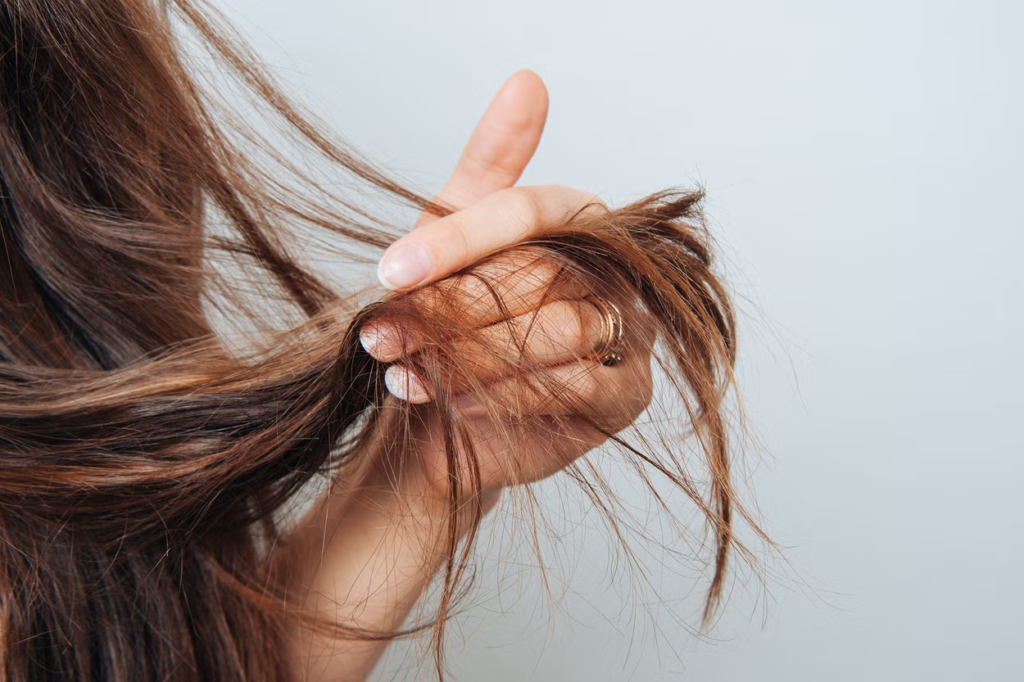
Let’s be brutally honest for a minute. Have you ever sat on the edge of your bathtub, staring at a small graveyard of half-empty shampoo bottles, conditioner tubes, and miracle serums that cost way too much money, wondering why your hair still looks like a frizzy mess? I have been there. We all have. We get sucked into flashy marketing campaigns promising us “glass-like perfection” or “forty-eight-hour moisture locks,” we spend our hard-earned cash, and two weeks later, our hair is right back to feeling dry, brittle, and lifeless.
It is an exhausting, never-ending loop. But have you ever actually turned those plastic bottles around and tried to read the ingredients list? It looks less like personal care and more like a high school chemistry lab project. Sulfates that scrub away every single ounce of your natural protective oils, synthetic silicones that lay down a slippery plastic wrap over your strands just to fake a healthy shine, and heavy artificial perfumes that leave you with a low-grade headache. Is it any wonder our scalps get itchy, our ends split into two, and our hair throws a dramatic tantrum the second we miss a single wash day?
Stepping away from that corporate hamster wheel isn’t just about swapping out a product brand—it is an emotional and physical exhale. It is a return to a slower, kinder way of treating your body. When you start viewing your hair as a living, breathing part of nature rather than an inanimate object that needs to be tortured into submission with hot irons and harsh chemicals, everything shifts. You stop fighting your natural waves, you let go of impossible airbrushed standards, and you finally build a peaceful routine that heals your hair from the inside out. Let’s sit down and walk through how to completely transform your hair wellness journey right now.
Your Scalp Is Living Soil (The Hidden Ecosystem)
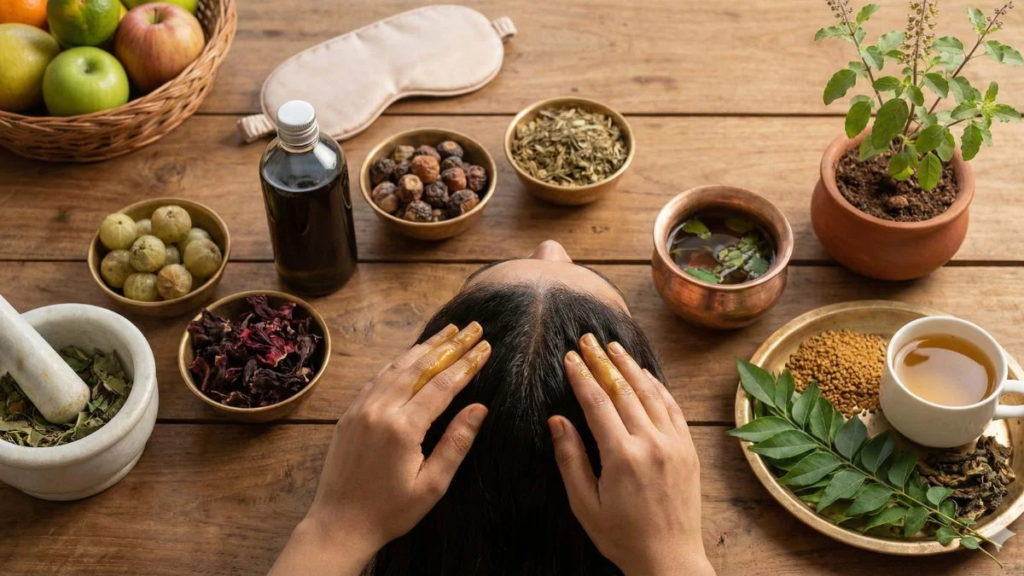
Before we ever talk about botanical oils, herbal rinses, or DIY kitchen masks, we have to talk about the roots. Literally. Your hair does not exist in a vacuum; it is a direct extension of your overall vitality, rooted deeply in the living, breathing ecosystem of your scalp.
Treating Your Scalp Like Fertile Earth
Think of your scalp as garden soil. If the soil is stressed, parched, parsimonious, or choked out with heavy chemical buildup, nothing healthy can truly thrive out of it. Most of us commit the ultimate skincare sin on our heads: we use aggressive industrial detergents and heavy foaming agents that we would never dream of rubbing onto the delicate skin of our faces.
Your scalp is packed with tiny sebaceous glands designed to pump out sebum—a brilliant, natural oil engineered by nature to waterproof, condition, and shield every single hair strand. When you blast your head with harsh sulfates day after day, you trigger a biological panic attack. Your scalp thinks, “Oh no, we are completely stripped bare!” and goes into overdrive, pumping out double the amount of oil just to protect itself. That is how you get trapped in the miserable daily-wash cycle.
Porosity and the Myth of One-Size-Fits-All Care
Ever bought an expensive organic product because a beauty influencer swore it was life-changing, only for your hair to turn into a greasy, weighed-down disaster? That happens because hair has a distinct personality—specifically, a unique porosity level.
- Low Porosity Strands: Your hair cuticles lie flat and tightly sealed, like tiny roof shingles. Moisture bounces right off, and heavy products just sit on top like an oily shield. You need lightweight, fluid hydration like fresh aloe juice and light herbal infusions.
- High Porosity Strands: Your cuticles are raised, weathered down, or blown wide open from past heat styling or chemical coloring. Water rushes right in, but it evaporates just as fast, leaving you with endless frizz. You need heavier plant butters and sealing oils to lock that hydration deep inside where it belongs.
- Texture and Balance: Whether your hair is fine as a spider’s silk or coarse as wire, your strands require a custom dance of moisture and protein. Listening to what your specific hair is whispering back to you is the ultimate secret.
Ditching the Suds (The Gentle Art of Natural Hair Cleansing)
Modern advertising has brainwashed us into believing that if a shampoo isn’t bubbling up like a bubble bath in a Sunday morning cartoon, it isn’t actually cleaning anything. But that fluffy, mountain-high lather? That is usually synthetic surfactants doing their job a little too efficiently, robbing your hair of its natural armor.
Navigating the Transition Phase
When you first walk away from commercial, sulfate-laden shampoos, your hair is going to throw a minor tantrum. Please give it grace and a little patience. Your scalp needs a couple of weeks to realize it can finally calm down on its frantic oil production.
- Stretch Your Windows: Try moving from washing every single day to washing every three days. Pop a soft shower cap on during your ordinary showers and let warm, gentle water simply rinse away dust and light sweat.
- Embrace Co-Washing or Low-Poo: Switching to a cleansing conditioner or an ultra-gentle, plant-based cleansing cream cleanses the scalp softly without robbing it of its natural protective shield.
Herbal Rinses Grown from the Earth
Long before plastic shampoo bottles clogged our oceans, our ancestors walked outside, gathered local plants, and kept their hair vibrant using simple kitchen staples and garden herbs.
- The Apple Cider Vinegar (ACV) Reset: Mix two tablespoons of raw, unfiltered apple cider vinegar with a cup of pure water. Pour it through your crown after washing and let it sit for sixty seconds before rinsing. ACV matches the natural slightly acidic pH of your scalp, melts away stubborn buildup, seals down the cuticle, and leaves your hair catching the sunlight with a dazzling mirror-like shine.
- Rosemary and Nettle Infusions: Steep dried rosemary or stinging nettle in boiling water for half an hour, strain the liquid, and use it as a final pour-over rinse. Rosemary has been celebrated for generations for stimulating hair follicles and encouraging thick, resilient growth.
Deep Nourishment Straight from the Botanical World
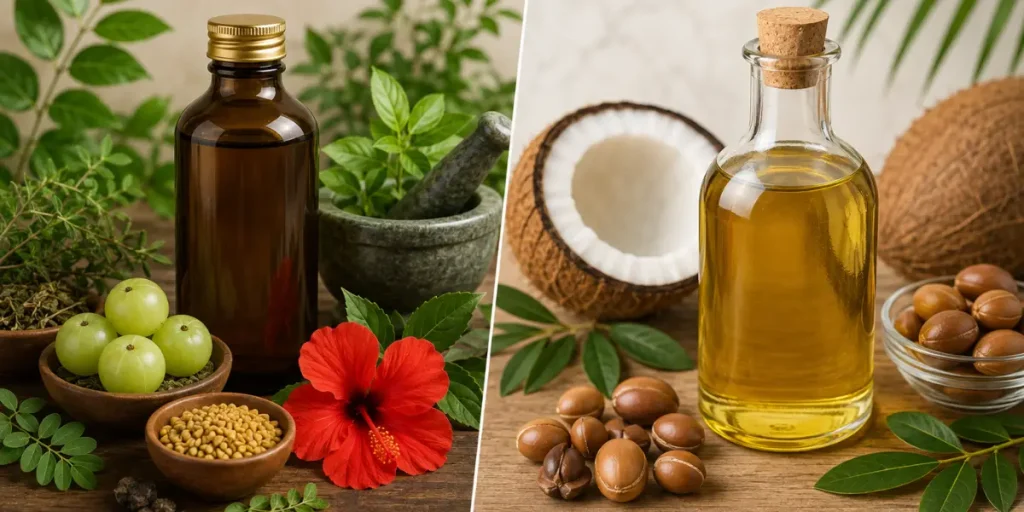
When your hair feels parched, brittle, or fried, grabbing a silicone-packed serum gives you a temporary illusion of health. It coats the hair shaft in a slippery plastic film that eventually blocks true moisture and causes snaps. Real nourishment works differently—it actually penetrates the fiber, restoring elasticity and softness from the inside out.
Plant Oils That Understand Human Skin
Not all oils behave the same way. Heavy mineral oils just sit on top of your hair like a plastic raincoat, attracting dust and dirt. Botanical oils, however, share a molecular architecture remarkably similar to your skin’s natural sebum.
- Jojoba Oil: Because it mirrors human sebum so closely, jojoba is effortlessly accepted by both your scalp and ends. It is lightweight, deeply balancing, and entirely non-greasy.
- Argan Oil: Loaded with vitamin E and rich essential fatty acids, liquid gold from Morocco is an absolute lifesaver for dry ends and stubborn flyaways. Just a single drop warmed between your palms can tame a wild mane.
- Coconut Oil: A classic for a reason, coconut oil penetrates the hair cortex deeply due to its low molecular weight. Use it as a pre-shampoo treatment, but pay attention—if your hair ever feels stiff or straw-like after coconut oil, your protein tolerance might be high, meaning you should switch to a lighter oil like almond or grapeseed.
DIY Botanical Masks for Slow Weekend Rituals
Turn your hair care routine into a sacred Sunday ritual. Carve out thirty minutes of pure peace, put on some soft acoustic music, and mix up a treatment using ingredients right out of your refrigerator.
- The Avocado and Honey Remedy: Mash half a ripe avocado with a tablespoon of raw honey and a splash of olive oil. Avocado brings healthy fats and biotin, while honey acts as a natural humectant, drawing environmental moisture straight into your hair. Smooth it through, wrap your head in a warm damp towel, and let it work while you read a book or sip chamomile tea.
- Aloe Vera and Yogurt Shield: Pure aloe vera gel blended with plain yogurt creates a cooling, protein-packed mask that calms an irritated scalp while defining your natural curl or wave pattern.
Protecting Your Crown from Modern Hair Friction
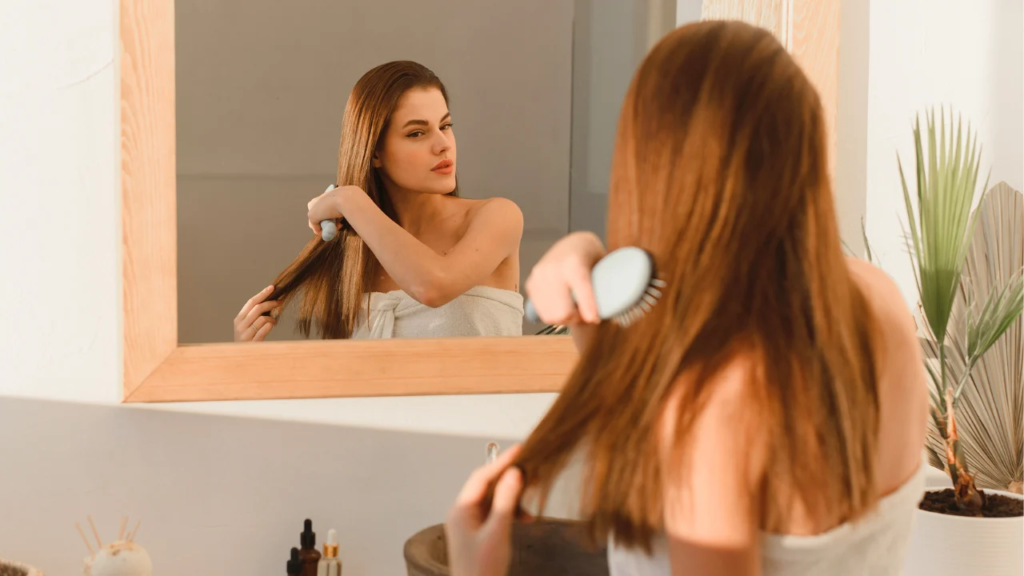
Even if you use the finest organic oils and herbal washes, your hair is still exposed to the physical friction and daily wear-and-tear of modern life. Protecting your physical strands is just as crucial as feeding them the right nutrients.
The Gentle Art of Detangling
Most of us treat tangles like an enemy that needs to be conquered with brute force. We grab a plastic paddle brush, start right at the crown, and aggressively yank downward. This snaps healthy hairs in half and creates split ends that travel all the way up the shaft.
- The Bottom-Up Rule: Always begin detangling at the very tips of your hair. Hold a section firmly above the tangle to prevent pulling at your scalp, and gently work through the knot. Once the ends are butter-smooth, move a few inches higher, working your way gradually up to the roots.
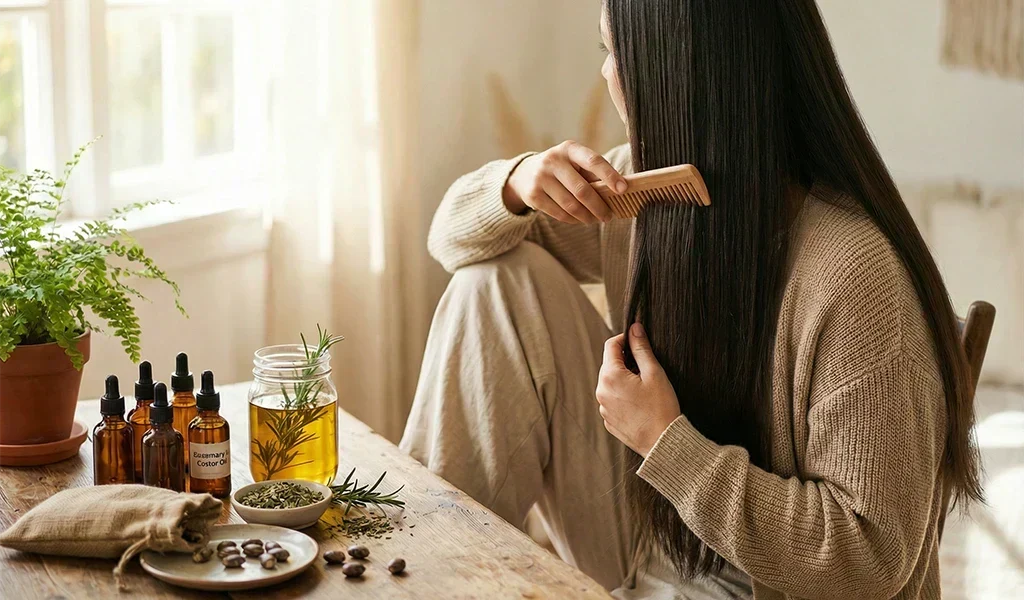
- Invest in Better Tools: Throw away fine-toothed plastic combs that generate static electricity and snap fragile strands. Switch to a wide-tooth wooden comb or a flexible boar-bristle brush that distributes your natural scalp oils smoothly down the length of your hair without causing friction damage.
Rethinking How You Dry Your Hair
That rough terrycloth towel you grab right after stepping out of the shower is secretly one of the biggest culprits behind chronic frizz and breakage. The loops of a standard towel act like tiny hooks, catching wet, fragile hair cuticles and ripping them apart.
- The Cotton T-Shirt Swap: Wrap your hair in a soft, old cotton t-shirt or a dedicated microfiber towel instead. Gently squeeze—never rub—the excess water out of your strands.
- Embrace Natural Air Drying: Whenever possible, give your blow dryer a well-deserved vacation. Heat styling fries the moisture right out of your cortex, turning a soft strand into straw. If you must use heat, always apply a natural protectant like pure aloe juice or grapeseed oil, and keep your tool on the coolest setting possible.
Nighttime Sanctuaries for Your Hair
What happens to your hair while you sleep? If you toss and turn on a traditional cotton pillowcase, your hair experiences hours of friction against rough woven fibers, leading to frizz, tangles, and morning bedhead nightmares.
- Silk or Satin Pillowcases: Upgrading to a smooth silk or satin pillowcase allows your hair to glide effortlessly across the surface all night long. Your curls stay intact, your style lasts longer, and your hair retains its precious moisture.
- The Loose Pineapple: If you have long hair, gather it loosely on top of your head using a soft silk scrunchie before bed. This prevents you from sleeping directly on your lengths and keeps tangles at bay.
The Inside-Out Connection (Diet, Stress, and Vitality) Hair
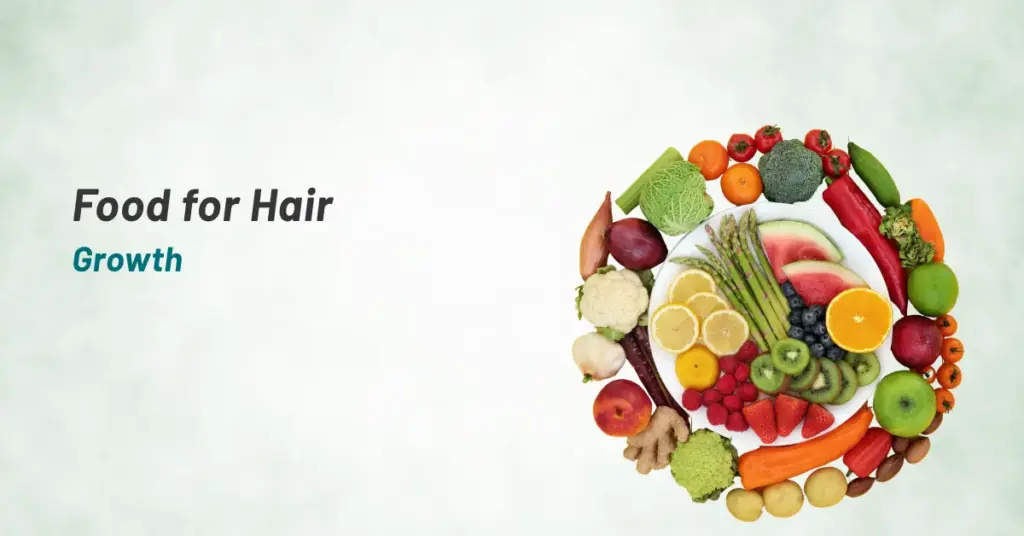
You can use the most expensive organic oils in the world, but if your body is running on empty, your hair will show it. Hair is made of a tough protein called keratin, and it is the very last place your body sends nutrients when you are stressed or undernourished because hair is not essential for basic biological survival.
Fueling Your Strands with Whole Foods
- Healthy Fats: Incorporate avocados, walnuts, chia seeds, and wild-caught salmon into your meals. Omega-3 fatty acids nourish hair follicles and provide essential hydration from within.
- Protein Diversity: Since hair is pure protein, ensure you are eating enough quality proteins—whether plant-based like lentils and chickpeas or pasture-raised eggs.
- Hydration Beyond Water: Drink plenty of pure water throughout the day, but also look to water-rich foods like cucumbers, celery, berries, and oranges to keep your cellular hydration levels high.
Managing the Stress-Hair Loss Connection
Ever notice how a stressful month at work or a major life event results in hair shedding a few months down the road? Stress pushes hair follicles prematurely into a resting phase, causing them to drop out en masse later. Grounding practices—like walking barefoot on the earth, deep breathing, journaling, or taking quiet morning moments without looking at your smartphone—aren’t just good for your mind. They directly protect the vitality of your hair growth cycle.
FAQ’S
1. How can I care for my hair naturally?
Follow a simple routine with gentle cleansing, regular conditioning, scalp care, and proper protection from heat and damage.
2. How often should I wash my hair?
The ideal frequency depends on your scalp and hair type, so wash when your hair becomes oily, sweaty, or dirty.
3. Is oiling good for hair care?
Oiling can help condition the hair and reduce dryness, but it may not be suitable for every scalp or hair type.
4. What natural ingredients are commonly used for hair care?
Ingredients such as coconut oil, aloe vera, and certain plant-based oils are commonly used in home hair-care routines.
5. How can I make my hair look naturally shiny?
Regular conditioning, gentle handling, adequate moisture, and limiting excessive heat styling can help improve the appearance of hair.